
Read grade and class together
B8 and B8M are different A193 stainless grades, commonly associated with 304 and 316 respectively. Class 1 and Class 2 identify different processing conditions: the common Class 1 supply is carbide solution treated, while Class 2 includes strain hardening. A description such as stainless B8M therefore omits a purchasing variable. Copy the complete engineer-selected designation onto each quote line, including edition and class, rather than using stainless or a chemistry nickname as the controlling requirement.
Keep the size range visible
For Class 2 material, mechanical requirements can depend on diameter. Ask the bidder to identify the applicable size range and results for each line instead of attaching one strength figure to the entire order. If the drawing mixes diameters, preserve those lines in the certification schedule. Request explanation of the processing and test representation offered, especially where stock material will be converted into finished fasteners. Chemical identification alone cannot distinguish the required strain-hardened condition.
Treat substitutions as engineering changes
Do not assume B8M is an automatically interchangeable upgrade, or that Class 2 should replace Class 1 whenever it is available. The service environment, design basis, supplied condition, and mating components remain project decisions. For hot service, ask the engineering authority to address the relevance of strain-hardened properties to the specified duty. State the final surface condition and independently define nut requirements. Avoid purchasing a stainless pair by grade resemblance when its complete component requirements remain unresolved.
Audit a shortened quotation
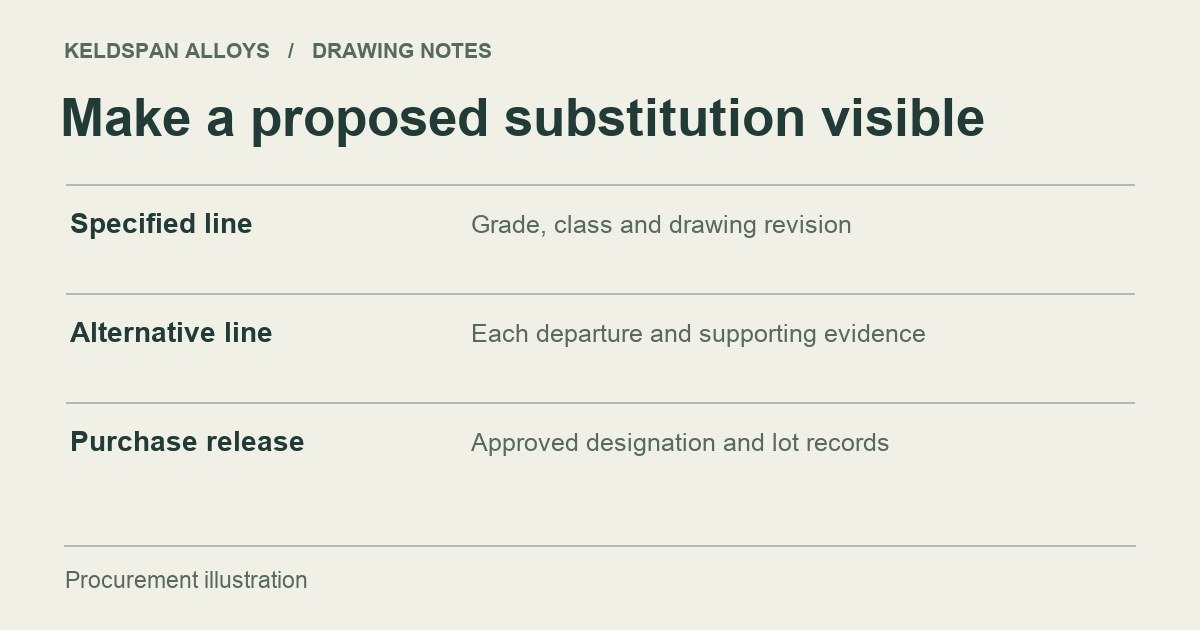
A useful document check is to compare a drawing calling for B8M Class 2 with a quotation shortened to 316 studs. Ask the bidder to restore the full designation, identify the represented diameter range, and state the available heat and processing records. If the seller can offer only Class 1 stock, require that exception to remain visible for engineering review. This small wording correction prevents a chemistry-equivalent description from being mistaken for compliance with the ordered mechanical condition.