
Start with the ordered product
A material test report is useful only when its identity matches the purchase order. Request the material specification and edition, grade, class or condition where applicable, product size, manufacturer identity, and heat and test-lot references. ASTM A962/A962M supplies common requirements for several bolting specifications, while the individual product specification takes precedence in a conflict. List project additions separately so the reviewer can distinguish standard compliance from an extra purchase requirement.
Ask for results with their context
Define which chemical and mechanical results the order requires, including units, test method, specimen information and relevant test temperature. Where heat treatment controls the specified properties, request identification of the final condition and the records needed to connect it to the tested lot. A starting-bar certificate may contribute to this chain, but ask how subsequent processing is covered. A chemical analysis does not by itself demonstrate finished-fastener strength, toughness or dimensions.
Perform a three-document reconciliation
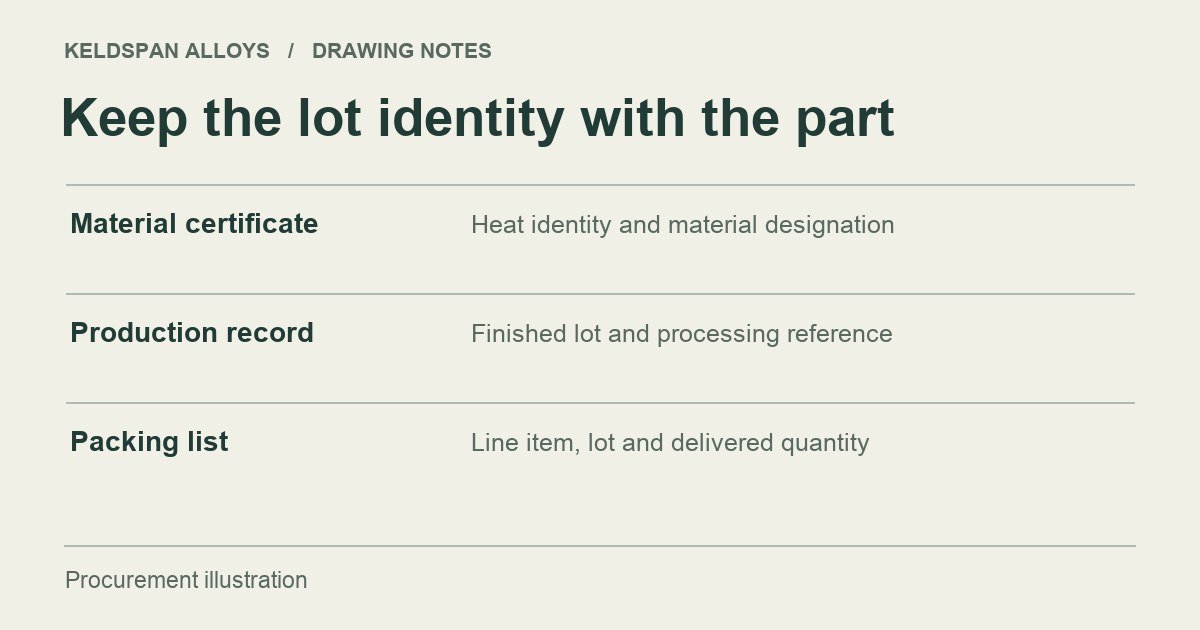
For an illustrative document check, compare a drawing calling for a specific stainless bolting class, a packing list identifying lot F12, and a report identifying only the original bar heat. Ask the supplier to show the relationship between that heat, the processing condition and lot F12. This is a traceability question, not proof that the material is defective. Resolve missing links before release rather than accepting a handwritten grade change on an unrelated report.
Define the deliverable before pricing
Specify the inspection-document standard and type when one is contractually required; ISO 10474 addresses document types for steel deliveries. Otherwise describe the required contents, issuer and validation clearly. State whether original manufacturer reports, a consolidated index, purchaser review or independent witnessing are required. Ask for a redacted sample package during quotation and identify when final records must be submitted. Keep any additional testing and document-review hold points visible in the quoted scope, with deviations listed individually.