
Separate the stud configurations
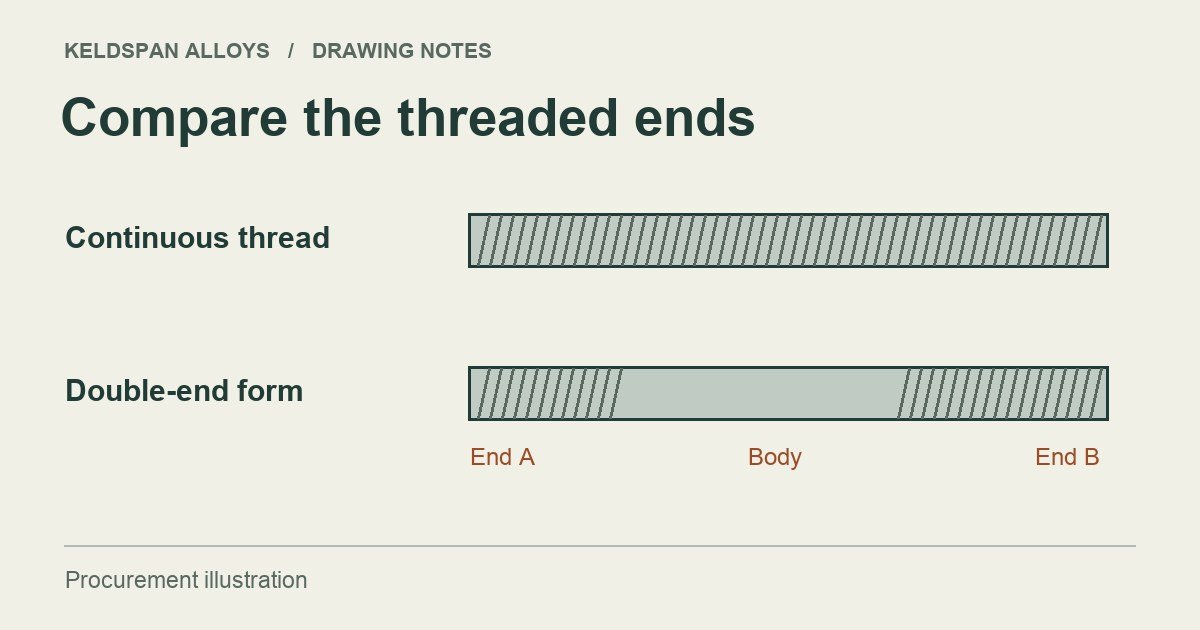
A fully threaded stud carries threads along its length. A double-end clamping stud has corresponding threaded ends separated by a body. a tap-end stud serves a tapped component and a nut-side connection. ASME B18.31.2 distinguishes these inch-series configurations and includes regular Unified and interference threads for tap ends. The words double end therefore do not establish the intended interface.
Identify each interface on the drawing
Label the tapped-component end A and nut-side end B. Give each its own thread designation, tolerance or fit requirement, thread length and termination detail. Show whether the intervening body is full or reduced diameter, and identify the controlling tapped-hole drawing. Do not infer interference from the label tap end. If both ends look similar, request a drawing-defined identification feature where needed so inspection can distinguish them without guessing from a photograph.
Write a configuration-specific inquiry
Illustrative RFQ line: Supply 36 tap-end studs to drawing TS-31 revision B. End A per tapped-hole detail A, end B per nut-side detail B. Retain the specified plain body and provide an end-by-end dimensional report. Include the material designation, finish and applicable standard editions in the attached requisition. Purchasing mistake: offering fully threaded rod as a direct replacement because diameter and overall length match. That proposal may remove a required body feature or change the tapped-end interface. have the bidder identify each difference instead of shortening the description to equivalent studs.