
Start with the required result
Cut threading removes material, while rolling forms threads by displacement. Both process names describe how a feature is produced; neither alone establishes acceptance of a particular specialty stud. State whether the drawing mandates a route, permits alternatives, or requires engineering review of a proposed change. Give the thread geometry, material condition, and component requirements first. This allows Keldspan Alloys to seek a quotation against your actual specification rather than a general preference for rolled or cut threads.
Ask where threading occurs in the process sequence
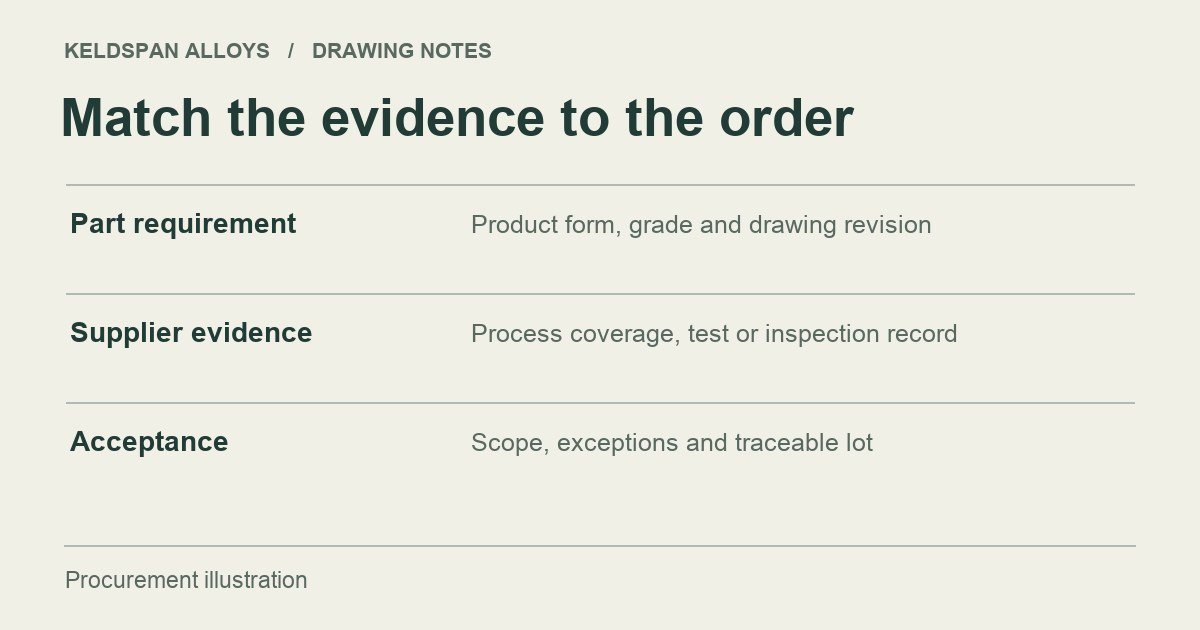
Request a proposed route showing the relationship between threading, heat treatment, surface finishing, and final inspection. If qualification evidence depends on that sequence, identify it in the RFQ. Ask which sizes, materials, and conditions the cited evidence represents and how the offered stud falls within that scope. Do not accept a broad claim about improved fatigue behavior as a numerical design input or as proof that an unrelated qualification covers this order.
Turn surface expectations into an inspectable requirement
A thread gage addresses specified dimensional features; it does not answer every surface-integrity question. Where engineering requires additional control, name the applicable acceptance standard or drawing limits and request the proposed examination method. ASTM F788/F788M addresses manufacturing surface discontinuities within its stated scope and calls for relevant requirements to be included in the inquiry and PO. Do not add an undefined instruction such as fully tested threads: identify the feature, acceptance basis, sampling, and report needed.
Compare two routes without erasing the difference
Suppose a drawing requires rolling after the specified heat treatment, but a supplier offers stock threaded before that treatment. The quote should flag the sequence as a deviation, identify any supporting qualification, and state whether a compliant route is available. An identical finished thread designation does not close the process requirement. Resolve the difference before placing the order and retain the accepted route in the purchasing record, especially when later repeat orders may use a different stock source.