
Describe the contact problem accurately
Galling involves adhesive damage and transfer between contacting surfaces; threaded stainless components can seize through this mechanism. The risk concerns the pair and its condition, not just the alloy name on the stud certificate. Manufacturer guidance identifies material condition, hardness differences, thread quality, contamination, and lubrication among relevant factors. Tell Keldspan Alloys whether the inquiry concerns a new combination, a restricted lubricant environment, or a replacement for an existing specification with reported seizure problems.
Make proposed mitigations reviewable
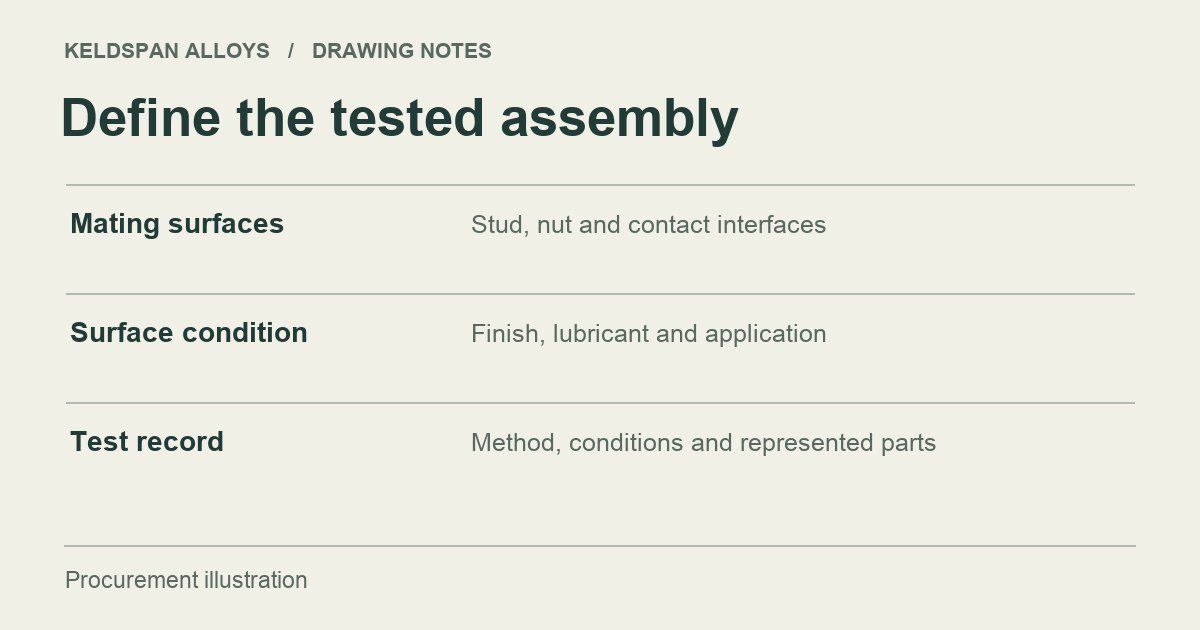
Request the proposed stud and nut grades, strength or processing conditions, surface finish, and any coating or lubricant as separate declared attributes. If the supplier recommends a different nut material, ask for a documented alternative that can be reviewed for corrosion, temperature, mechanical, and cleanliness requirements. A material change intended to reduce galling does not automatically satisfy those other constraints. Likewise, a lubricant suggestion is incomplete without product identification and confirmation that the project permits it.
Match the evidence to the claim
ASTM G98 ranks galling resistance of material couples in a laboratory method; its published guidance warns against using the result for final design and distinguishes its scope from lubricated service evaluation. Ask what a cited test actually represents. Where project-specific evidence is required, define the relevant component combination, surface condition, evaluation procedure, and acceptance criteria with the responsible engineer. Do not make a generic galling test an automatic requirement for every stainless fastener purchase.
Use a cleanliness restriction to test the proposal
For example, an equipment specification may prohibit residual lubricants on delivered fasteners. If a quotation's galling claim depends on a factory-applied wax, the offered condition conflicts with that requirement. Ask for the wax identification, proposed compliant alternative, and evidence relevant to that alternative. Do not accept an assurance based on the waxed version after the wax is removed. Record the final approved supply condition and protective packing so the purchased parts remain identifiable throughout receipt and storage.