
Send the temperature history
A single operating temperature conceals what happens during startup and shutdown. Manufacturer guidance describes how unequal thermal expansion and transient temperature differences can change preload. For an RFQ, provide the available heating and cooling profile, dwell periods, expected cycle count, and any difference between bolt and flange temperatures. Identify whether the profile comes from a design specification, measurement, or an estimate. This lets bidders recognize unresolved assumptions without inventing a thermal history for the project.
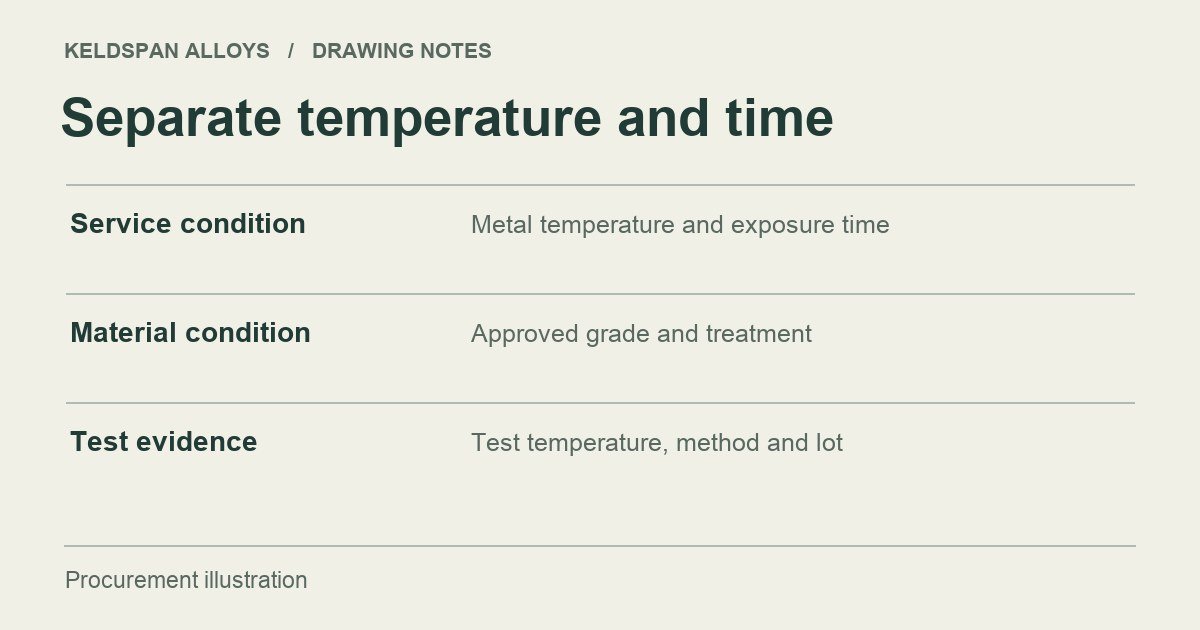
Describe the joint inputs already approved
Include the selected fastener and clamped-part materials, effective grip description, gasket identification where relevant, and drawing references. Provide the engineering authority's preload or bolt-stress requirements if they are established, together with the condition to which they apply. Assembly preload, hot operating load, and residual load after cooling are different data points. Label each explicitly. A sourcing request should transmit those requirements and identify needed evidence rather than ask a supplier to derive an acceptable joint load.
Make the requested evidence specific
State whether the quotation needs existing thermal-property data, material relaxation information, or pricing for an approved component or joint test. Define the acceptance document and the configuration represented by any proposed test. Ask how a change in fastener material, finish, or supplied condition would be declared. A room-temperature mechanical certificate cannot by itself describe preload through the temperature cycle, and a generic thermal-expansion curve does not establish performance of the complete joint.
Use an event table as an RFQ attachment
An illustrative attachment can use four rows: cold condition, heating transition, hot dwell, and cooling transition. For each row, record the specified bolt temperature, flange temperature, duration, and source of the information; leave genuinely unknown entries marked unresolved. The quote response can then identify which evidence is included for that duty and which needs a separate scope. This is more reviewable than a line saying suitable for repeated heating, because missing inputs remain visible before a purchase order is issued.